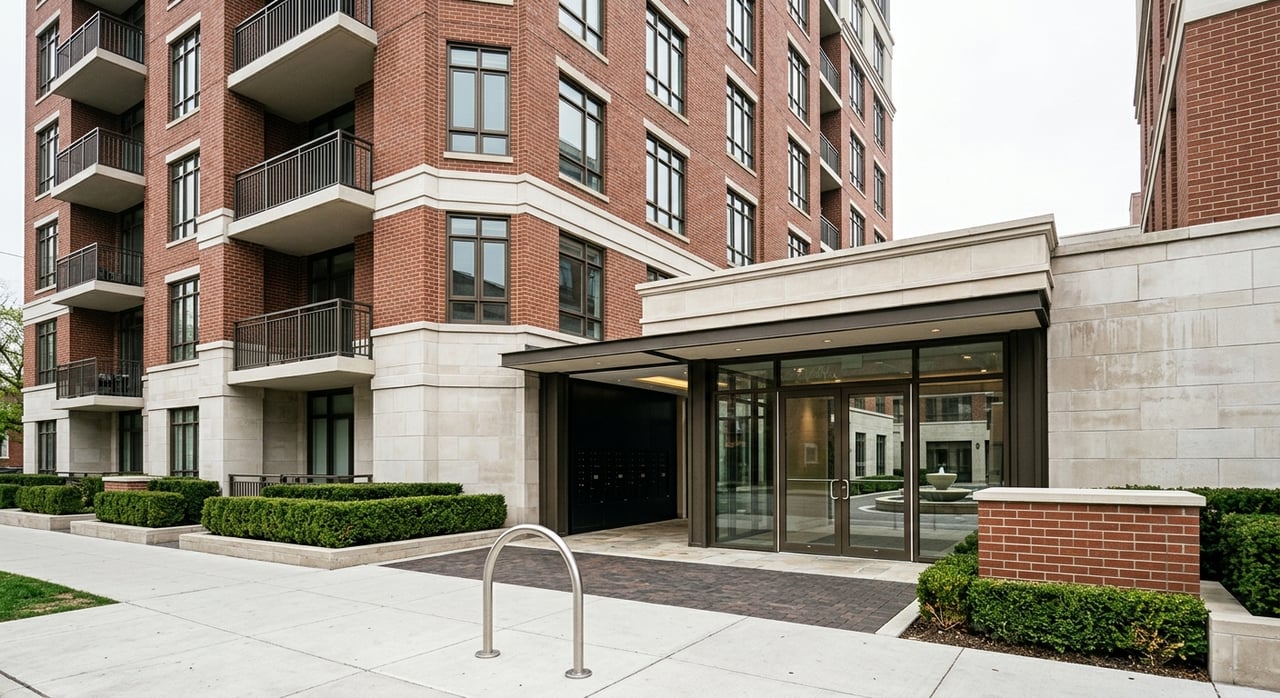
If you are wondering whether you can really live without a car in Lake View, the short answer is yes. For many people, daily life here works because so much of what you need is already woven into the neighborhood, from rail stations and bus routes to shopping streets, libraries, and the lakefront. If you are relocating, downsizing, or simply hoping for an easier routine, this guide will show you what car-free living in Lake View can actually look like day to day. Let’s dive in.
Why Lake View works car-free
Lake View stands out because it is not built around just one main hub. According to Choose Chicago, the neighborhood includes East Lakeview, Central Lakeview, Northalsted, and Wrigleyville, which gives you several walkable mini-districts instead of one single center. That layout can make everyday life feel more convenient, since errands, dining, and transit access are spread across the neighborhood.
Just as important, Lake View combines a dense street grid with shoreline access. Choose Chicago highlights both its convenient walkability and its lakefront setting, which helps explain why many residents can shift daily routines away from driving. In practical terms, that often means walking for quick errands, taking the train for longer trips, and using buses or bike share to fill in the gaps.
CTA trains shape daily routines
For most car-free residents, the CTA rail system is the backbone of daily movement. Lake View is served directly by Brown Line stations at Addison, Paulina, Southport, Belmont, Wellington, and Diversey, along with Red Line stations at Addison, Belmont, and Sheridan. CTA also notes that Purple Line Express trains serve Belmont, Wellington, and Diversey during weekday rush periods.
The schedule matters if you are planning real life, not just a map view. CTA says the Brown Line runs daily from Kimball to downtown, with service from about 4:00 a.m. to 1:30 a.m. on weekdays and Saturdays and from about 5:00 a.m. to 1:00 a.m. on Sundays and holidays. The Red Line adds another layer of flexibility because it provides 24-hour service.
That combination gives you options at different times of day. If you work downtown, go out late, or need flexibility for shifting schedules, Red and Brown Line access can make a major difference. The Purple Line Express can be helpful too, but because it runs only during weekday rush periods, the all-day transit foundation is still the Red and Brown Lines.
Key stations to know
Belmont is one of the most useful stations in the neighborhood because it connects multiple lines and expands your options. Wellington and Diversey also become especially helpful during weekday rush periods when Purple Line Express service is available. Southport, Paulina, Sheridan, and Addison stations each support different corners of Lake View, which means your exact block can shape your routine.
If you are choosing between homes in different parts of Lake View, transit proximity can affect your daily quality of life more than you might expect. A shorter walk to the train can make commuting, social plans, and errands feel easier week after week. That is one reason block-by-block guidance matters when you are evaluating where to live.
Buses fill the gaps
Rail may do the heavy lifting, but buses are what make car-free living feel complete. CTA highlights useful neighborhood routes like the 22 Clark, 76 Diversey, 151 Sheridan, and 152 Addison, which provide overlapping coverage along major corridors and rail stations. The 22 Clark route also includes overnight owl service, which adds flexibility outside standard hours.
CTA says all bus routes use accessible buses, and all trains have accessible features. For many households, that improves day-to-day usability in ways that are easy to overlook until you need them. It also means you can mix and match transit options depending on weather, energy level, or where your day takes you.
CTA’s standard fare also includes two free transfers within two hours. That is a small detail with a big practical impact, because it reduces the friction of stringing together a train ride, a quick bus trip, and a walk. In a neighborhood like Lake View, those short linked trips are often what replace driving.
Errands are built into the neighborhood
One reason Lake View works on foot is that daily needs tend to cluster along established commercial corridors. Choose Chicago points to shopping districts on Broadway, Belmont, and Southport, and these streets help anchor the neighborhood’s everyday rhythm. When services, stores, and restaurants are spread along walkable streets, routine errands often fit naturally into your day.
That can change how you think about time. Instead of planning a dedicated driving trip, you may pick up what you need on the way home from the train, during a short walk, or between other stops. Over time, that can make life feel less car-dependent and more flexible.
Libraries add everyday convenience
Lake View also benefits from civic spaces that support daily routines. Chicago Public Library’s Merlo Branch at 644 W. Belmont serves Lakeview, North Halsted, and Wrigleyville, while Lincoln Belmont is located at 1659 W. Melrose. Their facilities include Wi-Fi, study or meeting spaces, bike racks, and other practical amenities.
These kinds of places matter more than they may seem at first glance. If you work remotely, need a quiet place to focus, or want an easy stop for a quick task, nearby library branches can make a car-free routine easier. They help create useful third places within the neighborhood, rather than forcing every activity back into your home or office.
The lakefront extends your range
In Lake View, the shoreline is not just scenery. The Chicago Park District says the Lakefront Trail runs from Ardmore on the North Side to 71st Street, providing access to the lake for recreation and serving as an active transportation route. In 2018, the trail was split into separate 18-mile bike and 18.5-mile pedestrian trails.
That matters because the lakefront can become part of your everyday movement, not just your weekend plans. You can use it for walking, jogging, commuting, stroller walks, or simply getting from one place to another in a more pleasant setting. In a car-free lifestyle, having a route that is both functional and enjoyable can make a real difference.
Belmont Harbor at 3600 N. Recreation Drive and Diversey Harbor at 2601 N. Cannon Drive also reinforce how tied Lake View is to the waterfront. Even if you are not boating, these shoreline landmarks help define the rhythm of the neighborhood. Access to the water becomes part of ordinary life, not a special outing.
Divvy helps with in-between trips
Not every trip is a good walk, and not every errand lines up perfectly with a train station. That is where Divvy can help. The system operates 24 hours a day, 7 days a week, 365 days a year across Chicago and Evanston, and riders can unlock a bike at one station and return it to any other station in the system.
For many residents, that makes Divvy useful for the in-between distances. It can be a practical option when a destination feels too far to walk comfortably but too short to justify more complex transit planning. In a neighborhood like Lake View, that extra layer of flexibility can make car-free living feel much more realistic.
Recent transit improvements matter
It is easy to focus only on station names, but infrastructure improvements also shape daily reliability. CTA says the Red-Purple Bypass eliminated a 100-year-old junction north of Belmont, moved Brown Line trains onto dedicated tracks above Red and Purple service, and improved reliability through the area. For regular riders, that is more than a technical detail.
Better reliability can mean less waiting, fewer frustrating slowdowns, and a smoother commute through one of the most important transit areas on the North Side. If you plan to live without a car, those operational improvements matter because consistency is what makes transit feel dependable over time.
What to think about before going car-free
Living car-free in Lake View can work very well, but it helps to be honest about your own habits. If your routine stays mostly within Lake View or follows a straightforward route to downtown, the neighborhood’s train, bus, trail, and bike-share network supports that lifestyle well. If you regularly travel far outside those patterns, you may want to think more carefully about your block, station access, and daily schedule.
It also helps to remember that not every transit option works the same way all day. Purple Line Express service is limited to weekday rush periods, so it should feel like a bonus rather than the foundation of your routine. For most households, the most dependable no-car setup still centers on the Red Line, Brown Line, local buses, and walkable daily services.
If you are home shopping with a car-free lifestyle in mind, details matter. The right home is not just about square footage or finishes. It is also about how easily you can reach a station, a bus line, the grocery run, a favorite coffee stop, the library, or the lakefront on an ordinary Tuesday.
When we help clients evaluate Lake View, we look beyond the listing itself and talk through how the location will function day to day. That kind of neighborhood-level perspective can be especially valuable if you are relocating or trying to simplify your routine. If you are exploring a move to Lake View and want guidance that matches the way you actually live, connect with Ballis Group.
FAQs
Can you live car-free in Lake View, Chicago?
- Yes. Lake View has multiple CTA rail stations, neighborhood bus routes, walkable commercial corridors, library branches, bike share, and lakefront access that support a car-free lifestyle for many residents.
Which CTA lines serve Lake View for daily commuting?
- Lake View is served by the Brown Line and Red Line, with Purple Line Express service at Belmont, Wellington, and Diversey during weekday rush periods.
Does the Red Line run all night in Lake View?
- Yes. CTA says the Red Line provides 24-hour service, which is one of the strongest advantages for residents living without a car.
What bus routes are useful for car-free living in Lake View?
- Useful CTA bus routes in Lake View include the 22 Clark, 76 Diversey, 151 Sheridan, and 152 Addison. These routes help connect major streets and rail stations across the neighborhood.
Is the Lakefront Trail useful for transportation in Lake View?
- Yes. The Chicago Park District says the Lakefront Trail is both a recreation space and an active transportation route, which makes it useful for walking, biking, and everyday movement.
Are there library branches in Lake View that support daily routines?
- Yes. Merlo Branch and Lincoln Belmont both provide practical amenities like Wi-Fi, study or meeting spaces, and bike racks, which can support remote work and everyday errands.