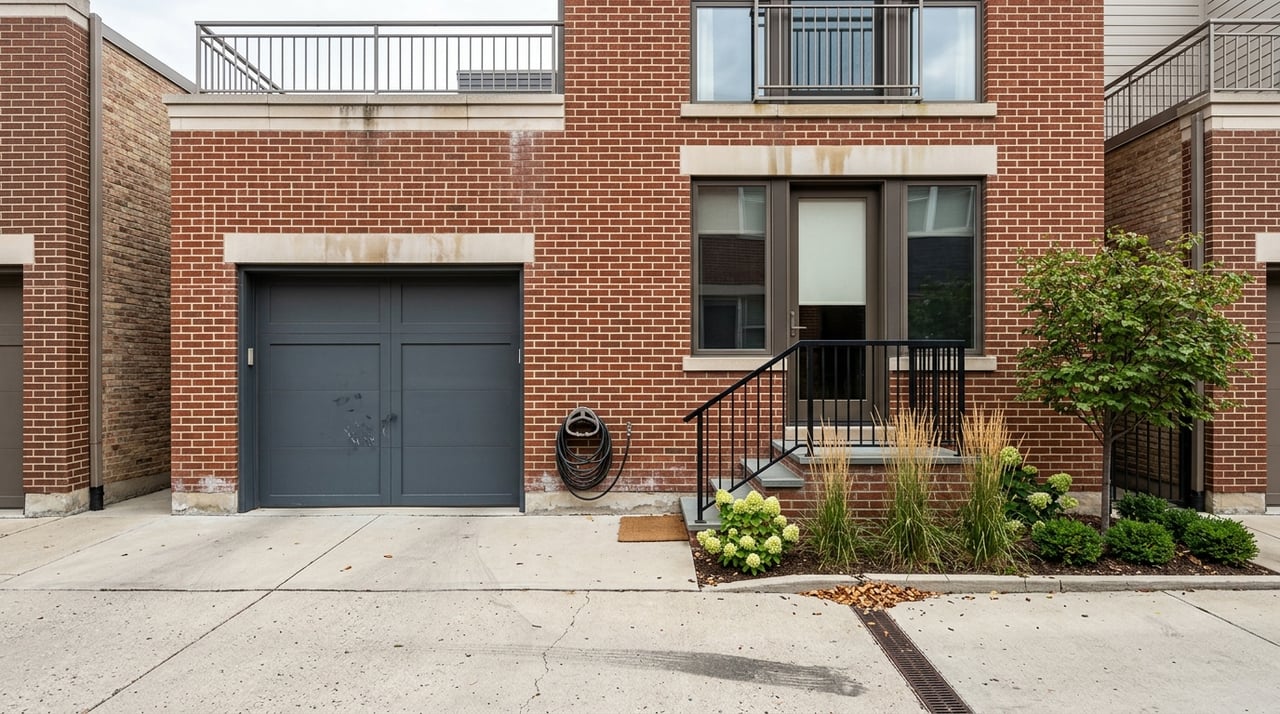
Thinking about buying a townhome or rowhouse in Lincoln Park? You are not alone. This corner of Chicago offers a rare mix of historic character, multi-level living, and easier upkeep than many detached homes, but the details can vary a lot from one property to the next. If you want to understand what these homes look like, where they tend to be found, and what to compare before you buy, this overview will help you shop with more confidence. Let’s dive in.
What counts as a townhome in Lincoln Park
In Lincoln Park, the terms townhome, townhouse, and rowhouse are often used somewhat loosely in the sales market. In practice, many attached homes are marketed as townhomes even when the underlying building form is a historic rowhouse.
That makes sense in a neighborhood where attached homes have been part of the streetscape since the 1870s and 1880s. Chicago landmark district records show that rowhouse living has deep roots here, which is one reason these homes still feel like a natural fit in Lincoln Park today.
Why buyers like attached homes here
For many buyers, attached homes sit in the middle ground between condo living and detached-house ownership. You may get more separation, a private entrance, and multiple levels, while still having less land and exterior upkeep than a standalone home.
Current Lincoln Park listings often highlight features that are harder to find in a typical high-rise condo. These can include direct exterior access, flexible lower levels, family rooms, open main floors, and top-floor primary suites.
Typical listings today show about 2 to 4 levels, 2 to 4 bedrooms, and roughly 1,850 to 3,000+ square feet. That gives you a fairly wide range, whether you want a more compact city home or something that lives closer to a single-family house.
Lincoln Park lifestyle adds to the appeal
Location is a big part of the draw. Lincoln Park itself is Chicago’s largest park at 1,214 acres, with more than 7.5 miles of lakefront trails plus many historic landmarks and buildings.
That larger setting helps explain why attached homes in the neighborhood feel distinct. You get a dense residential environment with easy access to major green space, lakefront amenities, and long-established architecture.
What features you will see most often
When you tour Lincoln Park townhomes and rowhouses, a few features come up again and again. These homes are often designed for buyers who want urban convenience without giving up too much space or privacy.
Private entrances and multi-level layouts
A private entrance is one of the biggest lifestyle differences versus a traditional condo. It can make day-to-day living feel more independent and more house-like.
Multi-level layouts are also common. That setup can create better separation between living, sleeping, and flex spaces, which many buyers appreciate if they work from home or want room for guests and hobbies.
Flexible lower levels
Many attached homes in Lincoln Park include a lower-level family room or bonus space. Depending on the layout, that area may work well for a media room, workout area, office, or guest overflow.
Because each floor plan is different, it is worth thinking less about the label and more about how the space actually functions for your daily routine.
Outdoor space
Outdoor space is a major differentiator in this category. Current examples in Lincoln Park include balconies, private terraces, gated front patios, landscaped courtyards, rooftop decks, and in some cases private yards.
The range matters because two homes at a similar price can offer very different outdoor experiences. If private exterior space is important to you, ask exactly what is exclusive, what is shared, and how accessible it feels from the main living areas.
Garage parking
Parking often matters more than buyers expect. Current listings include attached one-car garages and attached two-car garages, and some listing descriptions note that garage parking can be rare east of Clark Street.
That makes parking an important value driver, especially if you want easy daily access rather than relying on street parking. In a neighborhood like Lincoln Park, garage convenience can shape both lifestyle and resale appeal.
HOA and maintenance are not one-size-fits-all
One of the biggest mistakes buyers can make is assuming that all attached homes come with the same maintenance setup. In Illinois, attached townhomes can fall under a common-interest community structure, and owners may be required to contribute toward maintenance, improvements, insurance premiums, or real estate taxes tied to common areas managed by an association.
The practical takeaway is simple: the declaration, bylaws, and budget matter more than appearances. A home may look like a low-maintenance option from the outside, but the actual division of responsibility can vary quite a bit.
What to review before you buy
Before you move forward, it helps to review a few items carefully:
- What exterior elements are maintained by the association
- Whether roofs, masonry, decks, or courtyards are common responsibilities
- What insurance the association carries
- Whether reserve funding is in place for capital projects and deferred maintenance
- What monthly dues cover right now
Illinois law also requires condominium boards to maintain common elements and, for associations created after July 1, 1990, to provide reasonable reserves for capital expenditures and deferred maintenance. That is one more reason to look closely at the financials, not just the floor plan.
Lincoln Park HOA ranges vary
Current examples show a meaningful spread in monthly dues. Lincoln Park attached-home listings cited in the research range from about $175 per month at Cambridge to $616 per month at Lincoln Park West and $645 per month on Armitage.
Lower dues do not automatically mean a better deal. You will want to compare what is included, what may be deferred, and what your likely total carrying costs look like over time.
Lincoln Park townhome prices right now
If you are trying to set expectations, current listing data shows a broad pricing range. As of late June 2026, Realtor.com shows Lincoln Park with a median listing price of $945K overall, while Redfin shows 10 townhouses for sale with a median listing price of $1M.
These are listing snapshots, not closed-sale medians, but they offer a helpful look at current asking levels.
Current asking price examples
Recent attached-home examples in Lincoln Park include:
- 2707 N Lincoln Ave Unit R at $795K
- 1529 W Montana St #3 at $799K
- 1926 N Lincoln Park West Unit 2B at $989,900
- 2717 N Lehmann Ct Unit 1A at $999,000
- 434 W Armitage Ave Unit C at $1.2M
- Cambridge Avenue new-construction rowhomes at $1.68M, $1.95M, and $2.1M
Taken together, the market suggests that many renovated or smaller attached homes are landing from the high $700Ks into the low $1Ms, while premium new construction or especially notable historic properties can push well above $1.5M.
Historic rowhouses can also command strong pricing when they are large and carefully restored. One reported Chalmers Place rowhouse in the McCormick Row House District was asking just under $1.28M for a six-bedroom, 5,200-square-foot home.
Where townhomes and rowhouses cluster
If you are specifically looking for this housing type, it helps to know where it tends to be concentrated. Lincoln Park has both official landmark rowhouse districts and newer attached-home pockets.
Historic rowhouse districts
Chicago landmark records identify several official rowhouse clusters in Lincoln Park, including:
- McCormick Row House District
- Fremont Row House District
- Lincoln Avenue Row House District
- Burling Row House District
These are some of the clearest examples of attached-home concentration in the neighborhood. They also help explain why Lincoln Park offers a stronger rowhouse identity than many other parts of the city.
McCormick Row House District
The McCormick district is especially useful for buyers to understand. The city describes it as a late-19th-century rowhouse development built to generate rental income for the McCormick Theological Seminary, with a private street and park at the center of the development.
That history helps explain why homes there can feel architecturally unified and distinctly urban. If you are drawn to a more classic rowhouse setting, this is one of the most recognizable examples in Lincoln Park.
Newer and renovated pockets
Not all current options are in landmark districts. Market examples also cluster in areas described as East Lincoln Park, Lincoln Park West, Armitage and The Pointe at Lincoln Park, and Cambridge Avenue.
That gives you a mix of choices. You may find yourself comparing historic charm and established character on one hand with newer layouts, newer systems, and more contemporary finishes on the other.
Key questions to ask on a tour
When you walk through a Lincoln Park townhome or rowhouse, try to look beyond staging and finishes. The smartest comparisons usually come down to livability, costs, and long-term fit.
Ask about maintenance scope
Find out exactly how much exterior maintenance is included. The association may cover some shared elements, but the details depend on the governing documents.
Ask about outdoor privacy
A balcony, patio, courtyard, and roof deck can each feel very different in real life. Ask whether the space is private, shared, gated, directly connected to the home, or visible from surrounding units.
Ask about parking convenience
Garage parking can be a major plus in Lincoln Park. Ask whether the garage is attached, how easy it is to access, and whether parking is deeded or otherwise assigned with the home.
Ask whether the home is historic or new construction
Lincoln Park offers both landmark-era rowhouses and 2026 new-construction rowhomes. That distinction can affect layout, finishes, maintenance expectations, and the overall ownership experience.
If you are weighing townhomes or rowhouses in Lincoln Park, it helps to have guidance from a team that understands the neighborhood block by block, from historic attached homes to newer luxury product. For tailored advice and a clear buying strategy, connect with Ballis Group.
FAQs
What is the difference between a Lincoln Park townhome and rowhouse?
- In Lincoln Park, the terms are often used interchangeably in listings, and many attached multi-level homes are marketed as townhomes even when the building form is a historic rowhouse.
What size are Lincoln Park townhomes and rowhouses?
- Current listings commonly range from about 1,850 to 3,000+ square feet, with 2 to 4 bedrooms and 2 to 4 levels.
How much do Lincoln Park townhomes cost?
- Current listing examples range from about $795K to more than $2.1M, with many attached homes appearing in the high $700Ks through the low $1Ms.
Do Lincoln Park townhomes usually have HOA fees?
- Many do, but the amount and coverage vary by property, with current examples ranging from about $175 to $645 per month.
What outdoor space comes with a Lincoln Park rowhouse or townhome?
- Depending on the home, you may see balconies, terraces, patios, courtyards, rooftop decks, or in some cases private yards.
Is garage parking common in Lincoln Park townhomes?
- Attached garage parking appears frequently in current listings and can be a meaningful value driver, especially in areas where garage options are less common.
Where are rowhouses located in Lincoln Park?
- Official landmark clusters include the McCormick, Fremont, Lincoln Avenue, and Burling rowhouse districts, while current market listings also appear in areas like East Lincoln Park, Lincoln Park West, Armitage, and Cambridge Avenue.